


AI Fluency for Business Professionals: Why Working Harder Stopped Working
AI Fluency for Business Professionals: Why Working Harder Stopped Working
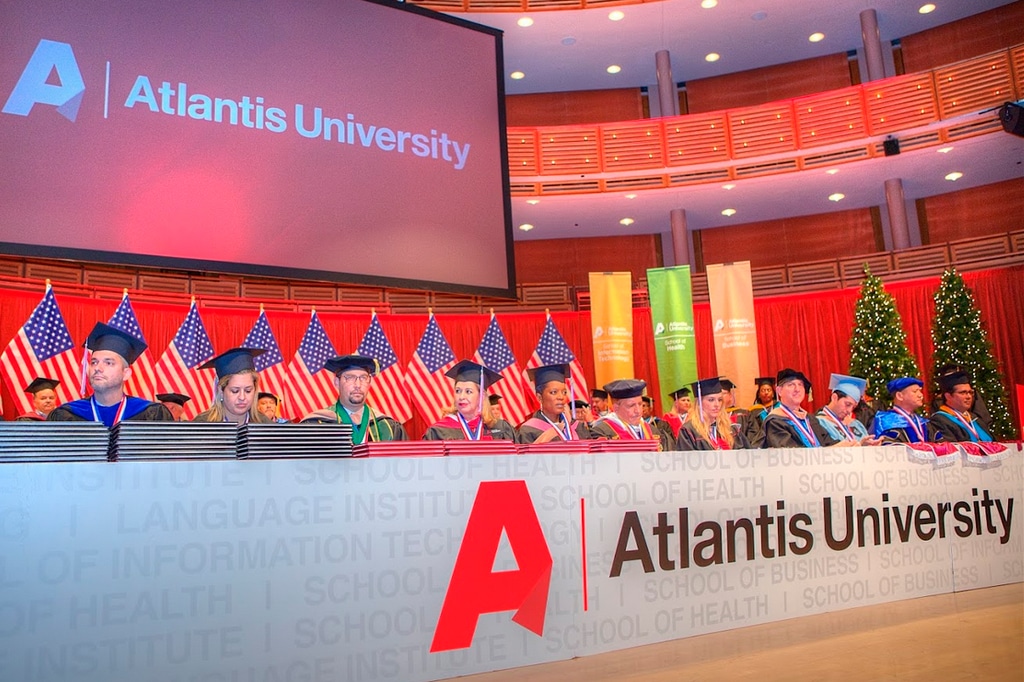
AI fluency for business professionals has quietly become the single biggest differentiator in hiring and promotion decisions — and most people never got the memo. You are not behind because you aren’t working hard enough. You are behind because the rules changed. That was the opening argument of Dr. Natasha Hampton’s keynote at the Atlantis University Business Summit 2026, delivered from two decades inside the rooms where promotion decisions actually get made.
The uncomfortable observation
Somewhere in your company right now, there is a person with less experience than you, less tenure, and possibly less raw talent. They are getting the promotions, the raises, and the seat at the table.
Not because they’re better. Because they speak a language you haven’t learned yet.
And the disruptive part isn’t what most career advice suggests. It isn’t work harder. It isn’t even be more strategic — whatever that’s supposed to mean. It’s the ability to walk into a room with a dashboard instead of an opinion.
In 2026, that’s not a nice-to-have. It’s the entry ticket.
The old belief — and why it stopped being true
The belief most of us were trained on: if I work hard, deliver results, and stay loyal, I will eventually be recognized and promoted.
For decades, that was mostly accurate. Promotions were largely a function of tenure, technical competence, and visibility inside a stable hierarchy.
That world is gone. Three data points explain why.
1. AI fluency now outranks leadership in MBA-level hiring
Employers have begun ranking AI fluency above leadership, above strategic thinking, and above communication for MBA-level roles. The message underneath is remarkable: we’ll teach you the soft skills — what we need on day one is that you already know how to work alongside AI.
That is a complete rewrite of what “qualified” means.
2. Almost every company is using AI. Almost none are doing it well.
The vast majority of companies are using AI in some form. A tiny fraction — a single-digit percentage — are generating real, enterprise-wide value from it.
Read that again, because the implication is the whole opportunity. That gap isn’t a technology gap. It’s a leadership gap. The companies in that small winning group have people in the room who know how to turn AI from a tool into a strategy. Everyone else is stuck experimenting.
Which group do you want to be in?
3. The market is pricing this skill set openly
Operations management roles now carry six-figure median compensation, with the top decile reaching well past $200,000. These are not entry-level numbers, and they are not aspirational projections. They are what the market is currently paying for strategic, data-literate operators.

Interested in becoming a student?
Look for your passion in our available programs
The new belief
Here’s the reframe worth carrying out of this article:
Your value is no longer measured by how much you do. It’s measured by how clearly you can show the impact of what you do — using data, using AI, and using the language of strategy.
And the genuinely good news: this shift doesn’t require you to become a different person. You can show up as yourself. What it requires is that you add a layer — a layer of fluency, a layer of language that most of your peers haven’t picked up yet.
Which is precisely why it’s still a massive opportunity rather than a baseline expectation.
What this looks like in practice
Theory doesn’t change careers. Lived experience does. The Summit built its case on four people who had all completed the same program:
- An entrepreneur who started with an idea and three friends in a garage in Caracas, and now runs a two-location brewery distributing across twenty states — driven, in his own account, by financial discipline and data-driven decisions rather than luck.
- A specialist who demonstrated live, on a shared screen, how AI solves four real business problems end to end.
- An executive who climbed from customer service representative to senior director at a Fortune 50 company in six years using KPI dashboards, then walked away to build his own logistics company — built almost entirely on AI.
- A current graduate student who deployed a functioning AI agent inside a real company, answering employee questions in two languages around the clock, for roughly the cost of a streaming subscription.
Four different paths. One common variable: none of them were AI experts. They were professionals who added a layer.
The three walls that stop people from learning this alone
If everything above resonates and your instinct is I’ll teach myself, be aware of what usually happens. Hampton identified three predictable failure points:
Wall 1 — No structure. You watch a Power BI tutorial on Tuesday, get busy, and don’t touch it again for a month. No sequence, no curriculum, no momentum.
Wall 2 — No feedback. You build something, but you have no idea whether it’s actually good, whether it would land with a real executive, or what you’re missing.
Wall 3 — No environment. You’re the only person at your company thinking this way. Nobody to test ideas against, no peer group, no accountability.
None of that is a personal failure. It’s simply what happens when you try to build a complex skill set in isolation, on top of a full-time job and a full-time life.
Frequently asked questions
What does “AI fluency” actually mean?
Not building models or writing code. It means knowing which problems AI can solve, how to instruct it well, how to validate its output, and how to translate the result into a business decision.
Do I need a technical background?
No. Every case presented at the Summit came from a non-technical professional — hospitality, sales, finance, operations.
Is it too late to start?
The data suggests the opposite. With only a small fraction of companies extracting real value from AI, the skill is still scarce enough to be a differentiator rather than a baseline.
Can I learn this on the job?
Partly. Most people stall at the three walls above — structure, feedback and peer environment are what a program supplies and self-teaching rarely does.
How long before it shows up in my career?
Faster than most expect. The student featured at the Summit deployed a production system before graduating; the executive moved from entry level to senior director in six years.
Conclusion
Building AI fluency for business professionals isn’t about chasing a trend. It’s about recognizing that the criteria for advancement were rewritten and the announcement never went out.
If you’ve felt like you’re doing everything right and still not moving forward — you’re not imagining it, and you’re not alone. The gap is real, and it’s specific enough to be closed deliberately.
The STEM MBA at Atlantis University — a Master of Science in Business Administration with a concentration in Business Intelligence and Analytics — is built around exactly this: AI fluency, data skills, and the strategic language the market is currently rewarding. It’s delivered with full flexibility for working professionals, and carries a STEM designation relevant to international candidates.
Become a student at Atlantis University
Related Posts

AI Fluency for Business Professionals: Why Working Harder Stopped Working

The Three AI Maturity Levels — And Why Most People Never Leave the First One

How to Design Instagram Carousels with AI — Without a Designer

Microsoft Guidelines for Human-AI Interaction